December 8, 2025
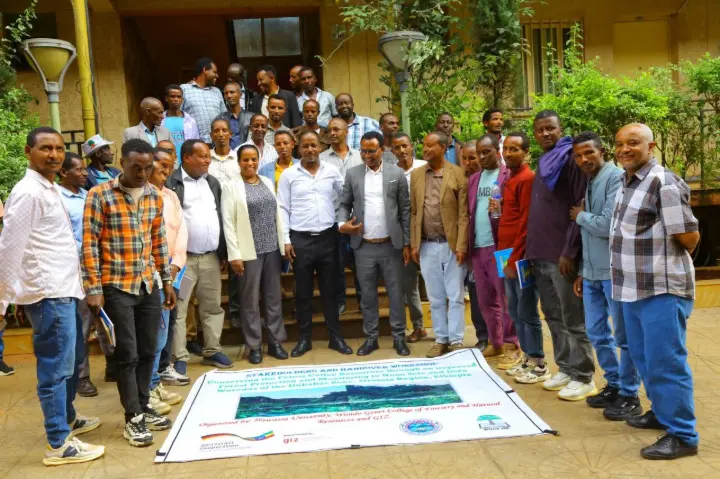
College of Forestry & Natural Resources at Hawassa university, in collaboration with the German Development Organization (GIZ), officially handed over a project on “Improved Forest Conservation and Monitoring to Protect Forest Coffee Resources” that has been implemented over the past three years at Nadhi Nono and Dido districts of the Illubabor Zone in Oromia Region to the Ethiopian Wetlands and Natural Resources Association (EWNRA), November 27, 2025.
In his opening remarks, College Dean Dr. Teshale W/Amanuel emphasized Ethiopia’s unique position as the origin of Arabica coffee and the special responsibility it holds in conserving this genetic resource. He also underscored the vital ecological, cultural, biodiversity and economic values of Illubabor’s forest ecosystems in this regard.
Dr. Motuma Tolera, Director of the Forest Sector Transformation Unit at Ethiopian Forest Development (EFD), in his keynote address, highlighted the national-level opportunities in the forest sector, the significant potential of carbon finance, and the importance of sustainable forest management in Southwestern Ethiopia.

According to Dr. Berhanu Terefe, the principal investigator from HU, the project has achieved these: mapping forest, semi-forest, and home-garden coffee systems; establishing 45 permanent sample plots (PSPs) for long-term monitoring; generating baseline carbon, soil, and vegetation data; conducting participatory GIS (PGIS) activities in collaboration with the community; training PFM members, experts, and cooperative unions on biomass assessment, carbon measurement & compliance with the EU Deforestation Regulation (EUDR); and identifying pathways that support a sustainable forest-coffee value chain and future carbon-finance opportunities.
Mr. Aman Desta, a key member of the main team, delivered a speech titled “Sustainable Forest Management Opportunities in Southwestern Ethiopia.”
In addition, Teferi Mekuria, the Program Component Manager of the SUVASE project from GIZ, presented an overview of the key interventions in the project areas and the remaining activities with each partner until the end of March 2026.
Ms. Benete Krutzfeldt, Manager of the GIZ SUVASE Project, applauded the Hawassa University team for their successful project implementation with the numerous achievements registered.
During this session, monitoring and data collection tools, and responsibilities were officially handed over to the EWNRA. The handover ceremony was accompanied by stakeholder discussion on the project’s implementation process, with participation from government officials from zone, district, and kebele levels; community leaders; sector experts; Participatory Forest Management groups (PFMs); cooperative associations; NGOs; researchers; media representatives; and various other partners.
The panel discussion examined the challenges and opportunities related to conservation of forest coffee in the project area, and a consensuses on the need to preserve llubabor’s forest coffee landscape, and formally acknowledge the generations of knowledge and management practiced by local communities who have long preserved wild Arabica coffee.